Establish the base
Review well histories, downtime, tests, allocations and operating conditions before selecting a supportable decline curve.

Production performance
Summit Natural Resources evaluates producing assets by establishing a defensible base-production forecast, reconciling actual results to expectations and directing capital toward work that can improve reliability, production or cash flow.
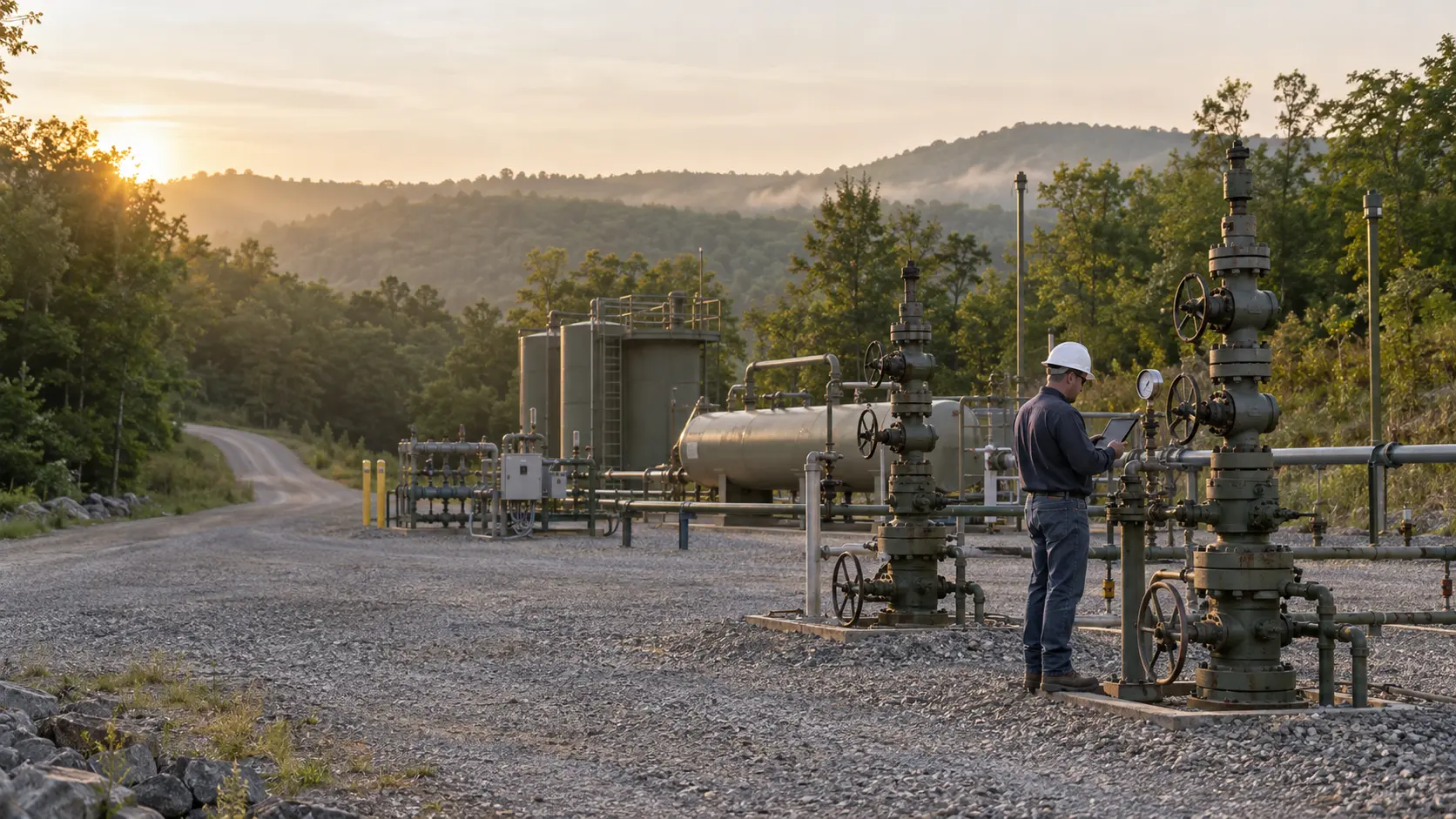
Operating framework
Production analysis is useful only when it leads to disciplined operating decisions and a clear record of what changed.
Review well histories, downtime, tests, allocations and operating conditions before selecting a supportable decline curve.
Compare actual production with the forecast and distinguish reservoir behavior from mechanical downtime, infrastructure constraints and measurement effects.
Prioritize workovers, maintenance and compression changes against expected production, cost, timing and execution risk.
Performance review
Test forecast shape, hyperbolic behavior and the transition to terminal decline.
Separate natural decline from temporary production loss caused by wells, facilities, pipelines or market constraints.
Measure incremental production, duration, added operating expense, capital cost, payout and the effect on lifting cost. Additional spending is justified when the resulting incremental cash margin more than covers the added costs, not merely because gross production increases.
Evaluate gathering pressure, compression capacity, artificial lift and maintenance needs that can limit deliverability. Lift and deliquification methods may include pumping units, gas lift, plunger lift and chemical foaming treatments such as soap.
Track field operating expense, lifting cost, recurring expense and operating netback with production.
Update the forecast when actual performance provides better evidence, and preserve the reason for every material change.
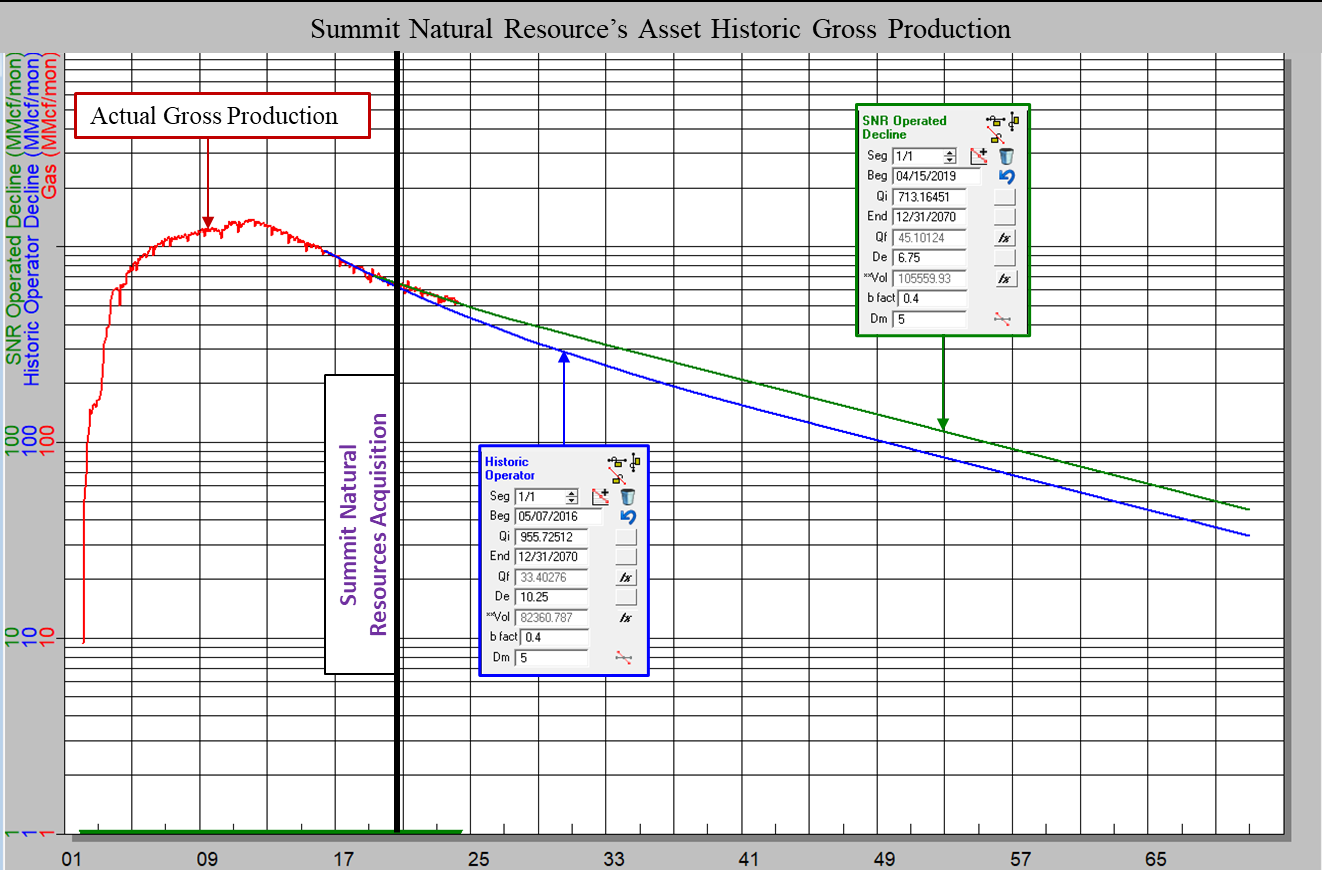
Summit Natural Resources I
Summit operated a mature PDP portfolio of 662 natural gas wells and executed 339 cash-flow-funded workovers. The fitted hyperbolic decline improved from approximately 10.25% under the historical-operator case to approximately 6.75% under Summit operations.
The result reflects active management of legacy production, workover selection, compression and operating expenses.
Decision discipline
Each review moves from observed field performance to a documented operating decision. The objective is not to explain every variance away; it is to determine what the evidence supports.
Validate well tests, production volumes, downtime and sales volumes.
Compare actual production with the well and portfolio forecast.
Separate reservoir behavior from mechanical and infrastructure effects.
Rank maintenance, workovers and facility changes by risk-adjusted value.
Measure the response, update the forecast and retain the operating record.
Investment application
From underwriting through operations, Summit uses production history to test technical risk, identify constraints, prioritize capital and determine whether an asset continues to support the investment case. Review our investment approach →